While food prep gloves are the law if you’ve got a restaurant, catering, or any other food business with the public, they’re also darned handy to have at home. With nice, food-grade disposable gloves, you can prepare what you like without the worry of ending up with garlic and onion hands – among other unfortunate things which may occur.
It’s also the sanitary choice and more and more these days folks will have them handy at home when preparing food for their guests or even just grilling for the family. Today we’re going to talk about the different types on the market today just in case you were thinking of getting some nice disposables of your own.
Along the way, we’ll give you some examples of the best gloves for food prep, as well as feedback from actual folks who have purchased and used them. By the time we’re done, you’ll have a better idea of what’s out there so that you can get the gloves that are going to be… Well, the best fit!
Types of gloves for food preparation – what you need to know!
As it turns out, there are quite a few different types of gloves on the market that are great for food prep. So, how do you choose?
Well, it really boils down to your specific needs. Some gloves are designed for very light food use, such as making sandwiches or salads, while others are a little more heavy-duty and often double for other uses around the house.
The most popular types of gloves that you’ll find are listed below and we’ll tell you a little about each in the sections to follow:
- CPE Glove
- Hybrid Glove
- Latex glove
- Nitrile glove
- Poly glove
- TPE Glove
- Vinyl glove
CPE Gloves
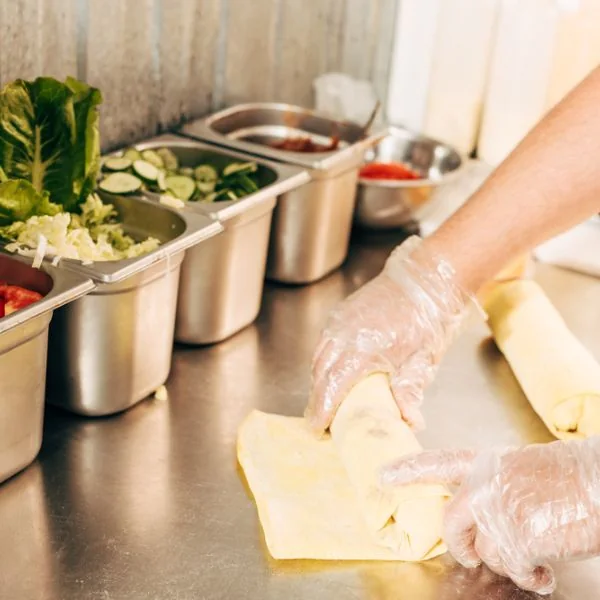
CPE is short for Cast Polyethylene and if you’ve ever used polyethylene gloves before, the easy way to remember CPE’s is that they are a sort of ‘upgraded Polyethylene. These types of gloves have a little more strength than polyethylene and are a bit more flexible, as well.
Hybrid Gloves
Hybrid gloves come in a few different flavors, but the most common is a glove that is made with Nitrile AND Vinyl. It’s a good mix, as they are more flexible than Vinyl gloves, but almost as strong as Nitrile-only gloves. As they cost less than Nitrile, this hybrid makes for a strong and cost-effective alternative.
Latex Gloves
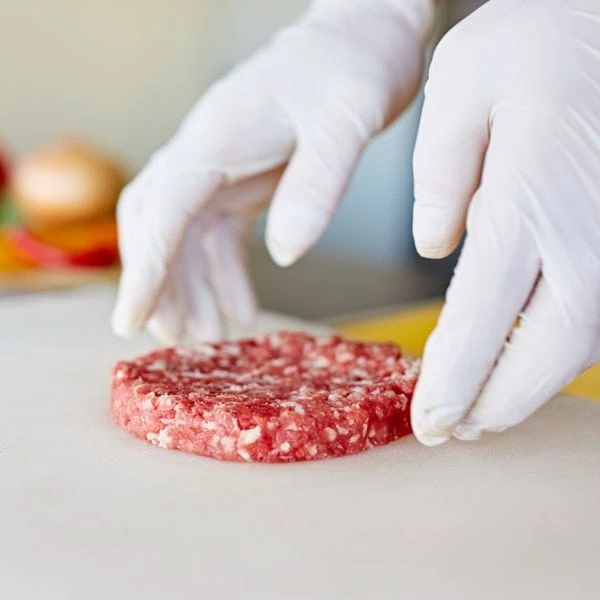
Latex gloves were once THE food prep glove of choice, but as many people have allergies to latex these days, they’ve fallen into disfavor. Not only that, they’re even banned in the following states:
- Arizona
- California
- Connecticut
- Hawaii
- Illinois
- Massachusetts
- Ohio
- Oregon
- Rhode Island
If you’re not allergic to latex then they are a great choice for personal use if permitted in your state, as they are very strong and highly flexible, but if you own a food service then you might want to try a different kind. With many people being allergic to it, this can create a risk as the latex will be in heavy contact with food, so use of these gloves is best kept at home and only if you know that no one in the household (or visiting guests) may be allergic.
Nitrile Gloves

Nitrile gloves are one of the most popular options, but also one of the costliest ones. That’s because they tend to be a little thicker and they’re made of a synthetic called nitrile rubber, which is resistant to many chemicals and harder to puncture.
Many folks use these with food, but also they’re popular in tattoo studios, labs, industrial, and janitorial businesses. Aside from their strength, they are also a bit more comfortable as they fit snugly and have a little flex, and they have a superior shelf life over many of the other options.
Poly gloves
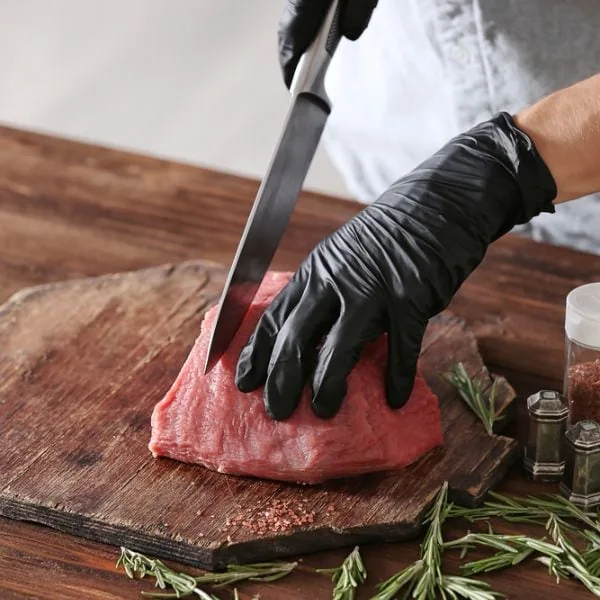
Polyethylene gloves are one of the most common varieties that you’ll find being used for food prep. They’re inexpensive and while they aren’t chemical-resistant, the thin plastic of the gloves is perfect for light food prep – especially when you want to be able to quickly swap them on or off without worry of the cost.
They are quite lightweight and since they tend to come in packages of 100-500 gloves, many folks will go with these and simply ‘double up’ when they need to.
TPE Gloves

Another option for disposable food prep gloves is Thermoplastic Elastomer or TPE gloves for short. These gloves provide a smooth, comfortable glove that is thin but has enough flex that it’s going to move naturally with your hand and shouldn’t cramp your style. Think of them as an option that is a little stretchy, like vinyl, but comfy like polyethylene gloves.
Vinyl gloves
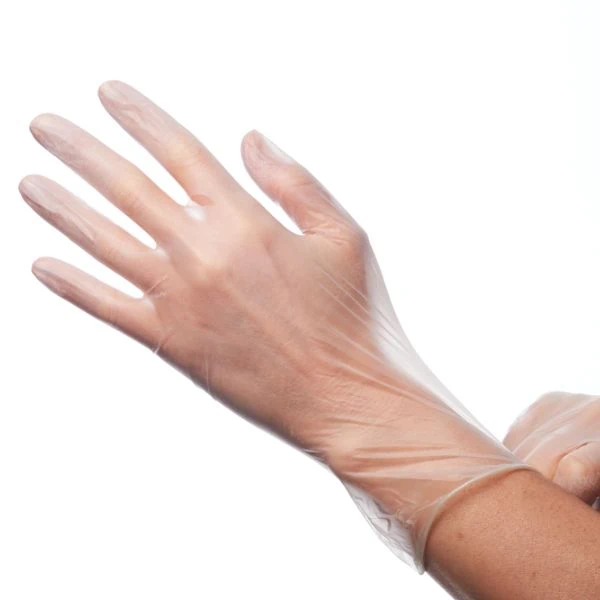
Our final glove type is Vinyl and these are an affordable option that costs a little less than nitrile and is also a good alternative to latex.
They are popular enough that you’ll find them in assorted thickness grades so that you can get a set of disposables that are just right for whatever you’ll be using them for. Thicker vinyl, for instance, is great for cleaning, and there are medical vinyl gloves as well, but for food prep, the most important part is to make sure that the set you like is powder-free.
Now that you know a little more about what’s out there, let’s take a look at some of the best options on the market when it comes to gloves for food prep!
The best gloves for food prep
In this section, we’ve collected some of the best gloves for food prep on the market today. We’re including an assortment, so that you can see all of the types that we’ve introduced you to today, and for each one we’ll tell you a little about them, including how they did in the reviews.
When we touch on the reviews, in order to keep things fair and balanced, we’re going to share snippets from both the 5-star reviews for these products, as well as the 1-star feedback that’s not always so savory.
Just keep in mind that we do this so that you can see both sides of the coin and so that if there are any big, red flags, we can share them with you so that you’ll know to check the reviews on your own before you commit to purchase.
With that said, let’s take a look at the best gloves for food prep so that you can see which ones you like the best!
Daxwell Premium CPE gloves
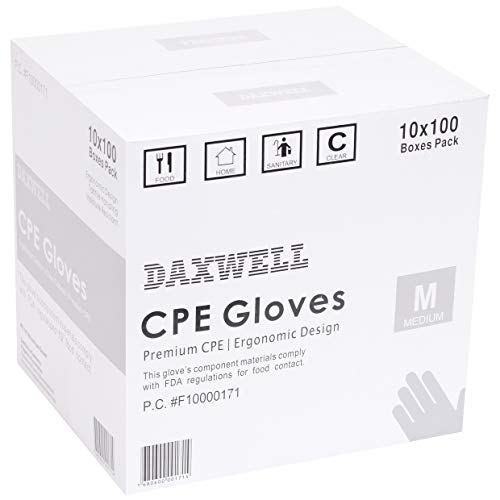
Our first set of gloves are these disposable CPE gloves from Daxwell, made of premium cast polyethylene and fully compliant with FDA food handling standards. Loose-fitting, they aren’t designed for heavy-duty work but are a great fit for light-fight handlings, such as making sandwiches, prepping portions, slinging salads, and such. These gloves also include a textured surface for superior grip and they’re priced to go.
So, how did they do in the reviews? Well, from a very modest pool of 40 reviewers, 66% gave this product 5 stars, while another 10% awarded them 4. Comments in praise of these CPE gloves included ‘Jerry’ telling us they ‘don’t rip at all and have a grip on them’ and ‘Bambi’ calling them ‘Awesome gloves’ and adding that they are great in the kitchen.
Moving forward to the less-savory side of reviews, 5% of the review pool were less enchanted with these CPEs, with ‘Chris’ complaining that while they are great gloves, the price keeps going up on them, and ‘Jasmine’ says they are ‘thin and big’ and complains that her hands are wet after using them. We promised to share both sides, so there you go, but if these gloves sound appealing we do recommend that you read the reviews a little on your own before passing any judgment!
Med Pride NitriPride Hybrid Nitrile Vinyl Blend
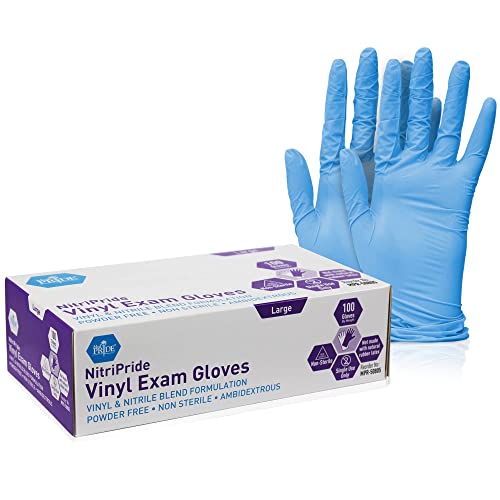
Next up we have these Med Pride NitriPride Hybrids made of a Nitrile Vinyl blend. 100% free of latex, rubber, protein, and powders, these one-use disposables incorporate an ambidextrous design so that they are easy to slip into and use no matter which hand of yours is dominant. Finally, there’s a 0-day money-back guarantee thrown in on the off chance that you don’t like them, so what’s not to love?
Reviews largely agreed with that sentiment, with a staggering pool of 35,7781 reviews and 67% of those were 5 stars. An additional 15% gave the product 4 stars, for an 82% satisfaction rating. Praise for this hybrid handwear included ‘hardier than my last purchase of nitrile gloves’ from ‘JosephPlumbMartin (revolutionary war soldier)’ and ‘Good quality and a fair price’ from Maurice.
Slinking over to the less-savory review side, we find that 6% of that extraordinarily-large review pool had more critical things to say, with ‘Kenneth R. Guerrero’ calling them ‘A tragic excuse for a glove’ and comparing their feel to that of ‘tissue’, while ‘Art Chick’ warns us that hers broke very easily. Numbers don’t lie, though, so it’s probably best to consider what you’ll be using them for and look for someone who’s done that already in the reviews!
Comfitwear Disposable Latex Gloves
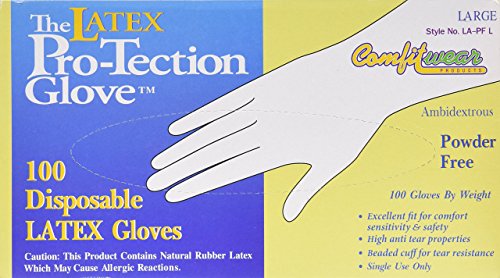
With so many non-latex gloves on the market, when you’re actually looking for them you can have a hard time finding them, but fret not – these Comfitwear Disposable Latex gloves are ready and waiting. Ambidextrous, powder-free, and highly tear resistant, each box of 100 is ready-to-go for your food preparation needs and they even come with a beaded cuff to make them extra tear-resistant.
Moving on to scope out the reviews, from a pool of a modest 890 reviews, a full 70% of customers gave this product 5 stars, while another 16% grudgingly spared 4. Comments from those who loved this latex offering included ‘Great for cooking’ from ‘Joan’ who added that there was ‘no contamination when working with raw meats and chicken’. User ‘Mary C’ shared input as well, advising that she found the large ones a great value and called them ‘perfect for my needs’, which in this case, was handling trash in her condo while keeping her hands clean and safe.
Flipping the review coin to the 1-star side, we show that 6% of the reviewers were less enchanted with these latex gloves, with ‘Debmusings’ saying that she found ‘excess extruding latex’ in one of her 100 gloves and ‘Marlene’ said that hers broke when she was using them for gardening. As always, use your best judgment – we just share the reviews, but it’s up to you to choose!
Comfy Package Black Nitrile Gloves
![[100 Count] Black Nitrile Disposable Gloves 6 Mil. Extra Strength Latex & Powder Free, Chemical Resistance, Textured Fingertips Gloves - Large](https://m.media-amazon.com/images/I/41pQ7nIU8aL._SL500_.jpg "[100 Count] Black Nitrile Disposable Gloves 6 Mil. Extra Strength Latex & Powder Free, Chemical Resistance, Textured Fingertips Gloves - Large")
Our net gloves in our selected assortment are these great-looking black Nitrile gloves from the Comfy package. Extra thick, so that they’re harder to tear, each of these gloves is 100% latex-free, chemical resistant, and also free of any pesky powder. This makes them perfect for the kitchen and many other uses around the house and with 6 millimeters of thickness, you’ll be sure to find plenty of applications.
Sticking our nosey-noses into the review pool, it looks like these Comfy Package gloves were a hit! From 9147 reviews, a solid 80% of customers liked them enough to give 5 stars and another 13% felt that they had earned at least 4. User ‘E’ calls them ‘great for around the house’ and adds that they reach up to the wrist, and ‘Typhoon Jenkins III’ calls them ’durable, strong, great for cooking’.
Wandering over to the dark side of the reviews, it looks like only 2% of customers didn’t like the ‘cut of Comfy’s jib’, with ‘mark deal’ stating that he’s never smelled anything so bad as these gloves and we had a few complaints that they were not 6 mils, despite what is on the box. While we have no way to verify this, we recommend that you double-check the brand and use your best judgment – most of those 9000+ folks sure seem to love them!
Gorilla Supply Premium BPA-Free Polyethylene LDPE gloves

Gorilla Supply is the brand of our next showcased gloves, which in this example are BPA-Free Polyethylene – LDPE to be exact, which means ‘low-density polyethylene’. What you get are thinner, less opaque disposable gloves that are powder-free and Food Grade safe. These gloves also have an ambidextrous design for easy on and easy off and with a minute, embossed texture, they’ll even provide you with a better grip.
Taking a close look at the reviews, from a pool of 1022 reviewers 76% felt that the Gorilla Supply gloves were worth 5 stars, and an additional 15% chipped in their own 4-star ratings. ‘Katalin’ calls them ‘perfect’ and says that she uses them for food prep, and ‘Amber Keown’ likes them too, adding that these are a ‘regular repurchase item’.
Leaving the beaten path to find the 1-star reviews, we found that there were 4% of customers who weren’t so pleased with their polyethylene, with ‘Craig’ advising us that his leaked and adding that he wore 3 pair handling hamburgers and his hands STILL got greasy. ‘L. Parker’ added her 2 cents worth, stating that they were overly large and ‘they would only fit a sumo wrestler’.
Take it all with a grain of salt, of course, but we promised balanced reviews and that’s what you’re going to get!
KingSeal PolyStretch TPE Poly Hybrid Disposable gloves
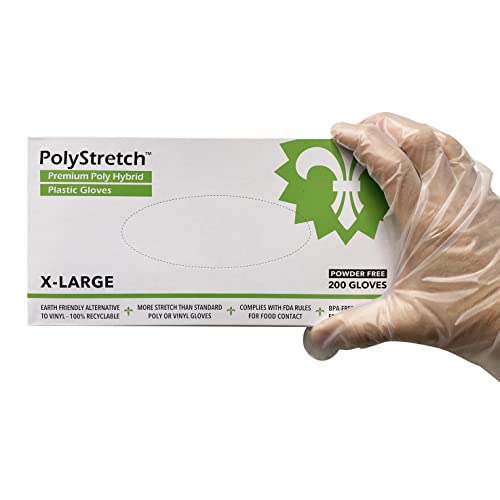
These KingSeal PolyStretch gloves are a great example of TPE gloves, also known as ‘thermoplastic elastomer’.
These gloves are quite popular, as they have a little stretch to them, and they also pull-closed when you’ve got them on for a little extra protection. FDA-approved, they are also powder, latex, phthalate, AND BPA free., and embossed for a superior grip.
Taking a gander at the reviews, the review pool is a little shallow at only 66 reviews, but 74% of those were 5 stars, and 15% were listed as 4. ‘Diplodocus Cruft’ shares that they ‘stay on very well and have a little stretch to them’, adding that they will buy again. ‘Pat Carlson’ chimes in and keeps it simple, stating ‘Great value, great price, great quality’.
On the less savory side of reviews, 5% of customers didn’t like the KingSeal so much, with ‘Michael Binegar’ telling us that his ripped when he flexed and ‘Jimmie’ seemed to agree, feeling that they were of ‘poor quality material’. For light food prep, TPE is typically stronger than poly and weaker than pricier Nitrile, so just keep that in mind and it should give you a better idea if these gloves will be a good fit for you.
FifthPulse Black Vinyl Disposable Gloves
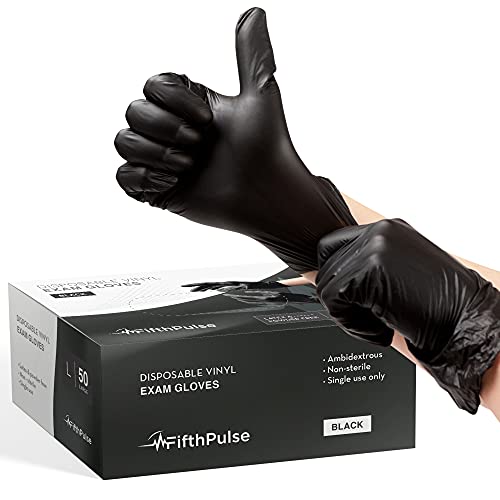
FifthPulse enters our list with these fantastic vinyl gloves and with 3 millimeters of thickness and a little stretch, they might just be exactly what you need.
Great for cooking, these gloves are also medical grade, and one of the perks of vinyl is that you always get an excellent grip. 100% latex and powder free, each pack comes with 50 gloves and should help you to make short work of food prep, handling, and a number of other useful tasks around the house.
Moseying on down to the 5-star corral, we can see that 70% of a whopping 33,874 reviews were 5-star ones, and another 12% gave these FithPulse gloves 4 stars. ‘Star’ tells us that these are her ‘favorite gloves for everything’ as she has a latex allergy and adds that they ‘don’t tear easily like cheap gloves’. ‘Katie N.’ satisfies our curiosity on another unspoken question by informing us that these gloves ‘didn’t make my hands smell weird’.
Of course, you know where we’re going now, and in the 1-star reviews, it looks like 6% of customers didn’t find these gloves to be such a good fit. ‘Human Decoy’ tells us that putting them on was difficult as they were too snug, and ‘Black Heart Barber Co LLC’ counters the good review from ‘Star’, telling us that ‘these gloves rip very easily and have a very little stretch to them’.
Take it all with a grain of salt, of course – we try to list both sides just to make sure that you check the reviews directly. With a 30k+ pool of mostly positive reviews, the odds are definitely in favor that you’re going to like these gloves.
Squish Blue Vinyl Disposable Gloves
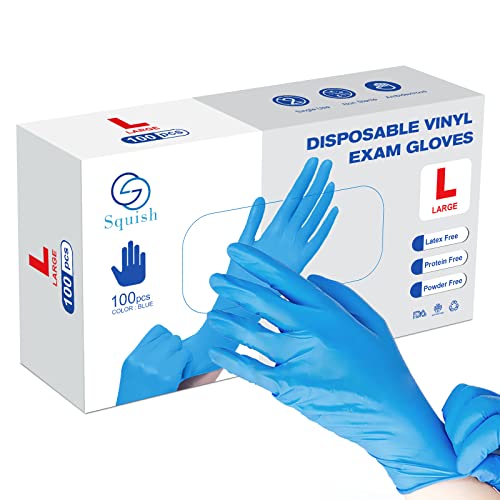
Since vinyl gloves are quite the popular option, we’ve got this pair from Squish to show you and they come in a lovely shade of blue.
Touted as ‘disposable exam gloves’ on the box, these vinyl gloves are also great for cleaning and food preparation, and they also have a little bit of a stretch to them to help ensure that you won’t tear them easily. Latex, protein, and powder-free, they’re a great choice for your food prep if you’ve got your eye on vinyl.
Walking down the street of reviews, we find that Squish received 6675 global reviews, 69% of which were 5 stars and another 15% were 4-star quality. Praise for these mighty blues included ‘Ellen S. Mones’ sharing that ‘Great, lasted all day doing kitchen work’ and added that she puts powder inside of hers since they can get a little sweaty. ‘JR’ also provided feedback, stating that ‘they work’ for cooking, cleaning, and even mechanical work.
Looking at the ‘Negative-Nancy’ side of things, it looks like 5% of reviewers have less-flattering opinions to share, with ‘Alex’ advising that their gloves were stuck together in the box and tore easily once they were on. ‘diamand’ added their input, as well, saying that the gloves tore within a few minutes of cleaning dishes. Overall, however, these gloves were quite well-received, so be sure to check them out if you’re curious and see what you think!
Brandon-Super Disposable Food Prep Gloves
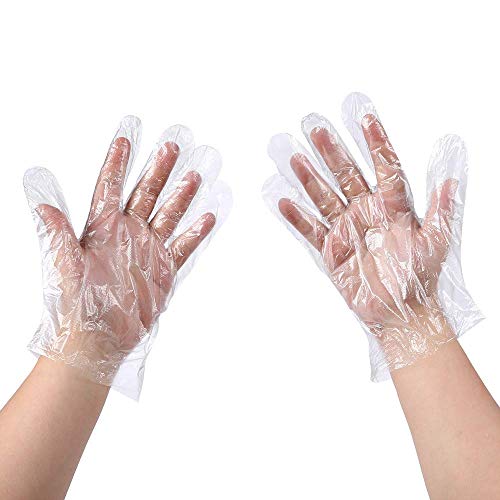
If polyethylene gloves are your preferred food-handling handwear, then these disposables from Brandon-Super will do the trick nicely. Each box comes with 500 ‘one size fits most’ gloves, which are great for food handling, cleaning, hairdressing, and more, and each is easy to use and embossed for a better grip when you need it. So, how did these PEs do in the reviews?
We’re glad you asked! Out of 18,349 reviews, Brandon-Super scored a combined 79% of 5 and 4-star ratings, with 64% being 5 stars and 15% giving them 4. ‘Jeffrey Smith’ tells us that they fit his large hands nicely and they’re ‘fine for light duty’, while Vine Voice user ‘InASense’ says ‘these are a lifesaver in the kitchen for multitasking’.
Looking into the dark well of 1-star reviews, though, 6% of customers were not so charmed by Brandon-Super, with ‘Maximum’ calling them ‘too short and too small’ and advising that they arrived bagged, rather than in a box. We checked to see if this was repeated, and there were a number of other reviews to this effect in the 1 stars, so if this is not to your liking then you may wish to contact the vendor, check for the brand name in an Amazon search, or you might simply go with another pair.
From what we could find, these seem to arrive bagged in packs of 50 and while some people liked this, we thought we’d be amiss if we didn’t share this info!
Best newbie tips for using disposable food prep gloves
If you’re new to using disposable food prep gloves then there are a few things to keep in mind when you are using them. We’ve collected a few tips to help you get started that we’ll list for you below:
- First and foremost, gloves do NOT take the place of good, old-fashioned hygiene. A thorough hand washing before you use them is important and should never be skipped.
- You should also wash your hands before you put on a new pair and switch to a new task. While your hands are kept safe from external contaminants, they’re also sweating inside the glove, so they could use a little soap and water before you switch.
- Don’t wash and reuse disposable gloves – they are intended for single-uses only.
- Don’t blow in your gloves either – you’re basically contaminating the inside and that’s a big no-no when you are handling food.
- Find your size and stick to it – some nice gloves that are a little too large will likely be a headache, as they tend to slip off quite easily and at the worst possible times.
Buying information for food preparation gloves
In this section, we’ve compiled some tips for those of you who will be buying their gloves locally or simply want to know what to look for when buying them online. Below you’ll find some pointers that we hope you’ll find useful:
- Vinyl is a good choice for cleaning, although Nitrile is usually much better. Hybrid gloves are a good middle ground, though, that can save you money and give you a little bit of both.
- For light food handling, polyethylene is a popular choice for good reason – they’re usually thick enough and the biggest perk is that they won’t cost you much and you can have 100’s ready and waiting to use how you like.
- While nitrile costs more, it’s probably the best option out there, because it’s puncture resistant and aside from the kitchen, it’s great for dirty chores around the home like cleaning big messes or taking out particularly noxious trash.
- When buying online, always click the worst reviews FIRST and force yourself to read 2 – 3 pages of them. The feedback that you’ll get is invaluable and you can also search them and use the task you want them for as a keyword – if someone else used them for this, then you’ll get some golden info this way.
Product recommendations
It’s time for us to pick a favorite and while all of these gloves are top-notch options, we felt that two stuck out a little more than the rest for the most common disposable uses.
Our favorites were the FifthPulse Black Vinyl Disposable Gloves for a ‘best kitchen and all-around use’ option and for light food prep, we felt that the Daxwell Premium CPE gloves are the ideal fit. With the FifthPulse, you’ve got some latex-free and powder-free gloves that are perfect for food prep, but also strong enough for cleaning and other errands where a flexy vinyl barrier might come in handy.
With the Daxwells, you’ve got an upgrade from standard polyethylene, including a textured grip, which is also FDA-compliant and definitely won’t break the bank. As the listed Daxwell box comes with 1000 gloves, you can use them, wash them, and switch out as much as you like and both your hands and your food will stay nice and clean!
If any of the other gloves caught your eye, then don’t worry – we’ve shared only the best, so go for the ones that look to be the best fit for your jobs. We just wanted to throw in our 2 cents worth and now you have it!
FAQs
We’ve just about reached the end of our time today, but before we officially ‘check out’ for the day, we’ve got a few frequently asked questions about food prep gloves. We hope that you’ll find this information useful and with that said, here are those questions!
How often should you change food prep gloves when preparing food?
As a rule, if your gloves become torn or contaminated, then it’s time to immediately switch to a new pair after washing your hands. You’ll also want to ‘clean and swap’ if you are switching from handling raw meats to handling fruits or veggies.
As far as what qualifies as contamination, use your best judgment, but things like coughing or sneezing, taking a smoke break, and going from raw to cooked foods – all of these applications and are definitely times to clean and switch.
How do you know if disposable food prep gloves are definitely food safe?
When in doubt, you can always consult the Code of Federal Regulations (CFR), specifically FDA 21 CFR Part 177.2600. This will give you a list of the chemicals and materials which are legally allowed to be used with and around food.
How should disposable food prep gloves be stored?
Ideally, you want to find a spot between 50 and 72 degrees, so that it’s cool, and it should also be well-ventilated and dark. You want to stay in that temperature range, as an environment that is too hot or too cold can degrade the quality of the gloves and possibly compromise their shelf life and usefulness.
Some final words on the best gloves for food preparation
In today’s article, we’ve explored the various types of food preparation gloves on the market so that you can make an informed decision about which types will suit you best. While our favorites today were the FifthPulse Black Vinyl Disposable Gloves for ‘multipurpose’ use and the ‘Daxwell Premium CPE gloves for light use, you really just need to consider what type of work you will be doing and with the tips we’ve shared today, we hope you’ll be good and prepared to pick the best ones for your needs.
We’d like to thank you so much for reading and we hope to see you again very soon!



David learned to cook at an early age after his mother told him that he couldn't live on pizza forever, Dave uses his modest kitchen skills to recreate sorely-missed recipes from home and to occasionally make new favorite ones from places he is visiting.