We are reader-supported. When you buy through links on our site, we may earn a commission. Learn more about our review process.

Nerdy Science in the Kitchen

Wagner Cast Iron Skillet: My First Vintage Cast Iron Cookware

Published:

Updated:


Vintage Wagner cast iron can be worth buying if the pan is flat, uncracked, not deeply pitted, not contaminated, and priced according to condition. The trick is not just finding an old skillet. It is learning what to check before you bid, restore, season, or cook with it.

My first vintage cast iron purchase was an eBay lot with three skillets: an unmarked #3, a WagnerWare #3 1053H, and a WagnerWare #6 1056N. This article is a case study from that first purchase: what looked promising, what I would inspect more carefully now, and how I would approach buying vintage Wagner cast iron today.

This is not a full company history or an appraisal guide. For the broader company timeline, start with our Wagner cast iron history guide. For logos, markings, and date ranges, use our guide to dating Wagner cast iron.

Not an appraisal: This article is a personal buying case study, not a professional appraisal. Value depends on exact mark, condition, rarity, demand, and verified sold prices.

Vintage cast iron skillet underside with notebook, magnifying glass, flashlight and ruler on a wooden table

What I Bought: Three Vintage Wagner-Style Skillets

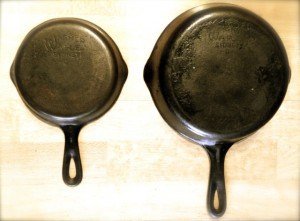
The lot included three small-to-medium cast iron skillets. One was an unmarked #3. The other two were marked WagnerWare: a #3 with the pattern number 1053H and a #6 with the pattern number 1056N.

WagnerWare 1053H number 3 and WagnerWare 1056N number 6 cast iron skillets from a vintage eBay lot
WagnerWare 1053H (#3) and 1056N (#6) from the author’s first vintage cast iron lot.

In the auction photo, the 1053H looked almost unused. It appeared raw gray rather than black and seasoned, with a little visible rust. The unmarked #3 and the 1056N looked much darker and more seasoned. The biggest thing I noticed right away was the smooth interior cooking surface.

PieceMarkingFirst impressionWhat it taught me
Unmarked #3No clear Wagner markLooked nicely seasoned and surprisingly smoothUnmarked does not automatically mean bad. Condition and cooking surface still matter.
WagnerWare #31053HGray raw iron look with light rust and little visible seasoningLight rust is often less scary than deep pitting or cracks, but you need clear photos before bidding.
WagnerWare #61056NBlack, seasoned, and promising as a user panA readable pattern number and a good cooking surface make identification and use easier.
WagnerWare 1056 cast iron skillet from the original vintage cast iron lot
WagnerWare 1056 skillet from the original vintage cast iron lot.

My original notes on the 1056N were enthusiastic: after cleaning and seasoning, it handled an egg without sticking. That does not turn this into a controlled cookware test, but it does capture why vintage cast iron hooks people so quickly. When the surface is smooth, clean, flat, and well-seasoned, it can feel excellent in everyday cooking.

Identify Your Own Wagner Cast Iron

If you found a Wagner skillet or are comparing an online listing, use this tool as a starting point. It can help estimate the likely mark family and date range from the visible logo, base style, and numbers.

Interactive tool

Wagner Cast Iron Date Finder

Choose the logo, wording, base style, and visible marks on the bottom of your pan. This tool gives a practical date-range estimate and the next checks to make before buying, restoring, or valuing a piece.

Era Needs more clues
Mark Unknown Wagner mark
Confidence Low

Select the logo or wording on the bottom of your pan to estimate a likely Wagner date range.

    Why Vintage Wagner Feels Different

    Many older Wagner skillets have smoother machined cooking surfaces than many modern rougher castings. That smoothness can help with the feel of seasoning and food release, especially after the pan is clean, dry, and seasoned properly.

    That does not mean every vintage Wagner is automatically better than every modern pan. A cracked, warped, deeply pitted Wagner is a poor user pan no matter how old the logo is. A modern Lodge skillet is affordable, durable, widely available, and easy to replace. Vintage Wagner is interesting because of its finish, history, weight, markings, and collector appeal.

    If you are comparing vintage brands, read our guide to Wagner versus Griswold cast iron. If you are weighing vintage against modern options, our guide to the top cast iron cookware brands is a better starting point.

    How to Read an eBay Listing Before You Bid

    Buying vintage cast iron online is mostly evidence work. You are not just buying a logo. You are buying the actual condition of the pan that arrives in the box.

    Ask for photos before you bid. A seller saying “flat bottom” may mean there is no heat ring, not that the pan sits flat without wobble.

    Listing clueWhat to checkWhy it matters
    Full underside photoWhole base, handle, numbers, logo, heat ring or smooth bottomYou need the full underside to identify and date the piece.
    Logo and exact wordingWagner, Wagner Ware, Sidney O, Sidney -O-, Made in USA, 1891 OriginalSmall wording differences can point to different eras.
    Size number#3, #6, #8, #10, etc.Useful for identification, but not the same as inches.
    Pattern numberFour-digit numbers such as 1053 or 1056, plus suffix lettersHelpful for identifying pieces and matching lids.
    Heat ring or smooth baseRaised outer ring or flat smooth bottomCan help narrow a date range when combined with the logo.
    Cooking surface photoSmoothness, pitting, scratches, sanding, carbon, rustA smooth cooking surface is usually more useful than a pretty underside alone.
    Sidewall photoCracks, chips, fire damage, repairsCracks and repairs can make a pan display-only or a walk-away.
    Handle photoCracks, chips, handle cutout, thumb rest, shapeHandle details can help identify the era and condition.
    Wobble/spinner descriptionAsk whether it rocks, spins, or sits flat on a known flat surfaceWobble matters more on glass, ceramic, and induction-style flat cooktops.
    Rust and buildupSurface rust, thick carbon, old grease, hidden pittingRust can often be restored, but thick buildup can hide damage.
    Lid fit if includedPattern number, rim fit, matching sizeWrong lids are common in mixed lots.
    Shipping costTotal cost, not just bid priceCast iron is heavy. Shipping can change the deal fast.
    Return policyReturns accepted, “as is,” damage claimsImportant if the pan arrives cracked, warped, or misrepresented.
    Seller responsivenessWill they answer condition questions and provide photos?A good seller makes the risk easier to judge.

    Red Flags I Would Not Ignore Now

    When I first started buying vintage iron, I was more willing to gamble on visible defects. I would be more conservative now, especially with cracks, wobble, deep pitting, and unknown-use pans.

    Red flagWhy it mattersBuy, negotiate, or walk away?
    CracksA crack is a serious structural issue. It can expand with heat and usually hurts both safety and value.Usually walk away or display-only.
    Heavy carbon buildupOld seasoning and grease can hide cracks, pitting, and repairs.Negotiate only if photos and return terms are good.
    Wobble or spinner behaviorA wobbly pan may be annoying or ineffective on flat cooktops.Negotiate or pass, depending on stove type.
    Deep cooking-surface pittingDeep pits can make food release worse and may not restore well.Usually pass unless it is a display piece.
    Unknown industrial useOld cast iron may have been used for lead, oil, chemicals, or shop work.Walk away.
    Possible lead contaminationLead contamination is not worth gambling with for cookware.Walk away.
    Very low price with poor photosA cheap pan can become expensive if it is cracked, warped, or badly pitted.Ask for photos or pass.
    “1891 Original” sold as 1891 antiqueWagner’s 1891 Original is generally a later line, not an 1891 antique.Buy only as a later user pan, not as early Wagner.
    Blurry listing photosYou cannot verify markings, cracks, or pitting.Ask questions or pass.
    Bad repairs or grindingWelds, grinding, and aggressive sanding can reduce value and safety.Usually pass.

    One older lesson came from a separate Wagner 1058 I bought later. Heavy buildup hid a crack until after cleaning. At the time, I treated it casually because the pan still seemed usable. Today, I would treat a cracked skillet as a major issue: either return it, keep it for display, or avoid buying it in the first place.

    About Wagner’s 1891 Original

    “Wagner’s 1891 Original” usually means a later line, not an 1891 antique. That is one of the easiest mistakes to make when you first start shopping vintage Wagner cast iron.

    Wagner Cast Iron’s official story page says General Housewares launched the Wagner’s 1891 Original line in 1987. A Los Angeles Times article from that same year described General Housewares replacing the Wagner Ware line with Wagner’s 1891 Original and adding redesigned handles plus seasoning instructions to the pan bottoms.

    Buying note: 1891 Original does not mean made in 1891. Look for later clues such as “Made in USA,” seasoning instructions cast into the bottom, redesigned handles, and a thumb rest.

    These pans can still be good user cookware. They are just not the same collector category as early Wagner, early Wagner Ware, or clean Wagner Ware Sidney-O pieces. For a fuller breakdown, use our guide to dating Wagner cast iron.

    What Wagner Numbers Like 1053H and 1056N Mean

    The #3 and #6 are size numbers, not exact inch measurements. Cast iron size numbers come from older sizing conventions and are best used as identification clues rather than tape-measure promises.

    The 1053 and 1056 numbers are pattern or catalog numbers. Those are often more useful than the size number alone because they help identify the specific piece and may help match lids. Letters such as H or N can indicate pattern or mold variations, but do not overinterpret a suffix letter without a collector reference.

    For a more systematic approach, use the Wagner cast iron date chart.

    What I’d Do When the Pan Arrives

    Here is the safer process I would follow now after buying a vintage Wagner skillet online.

    1. Photograph the pan before cleaning. Capture the underside, handle, sidewalls, pour spouts, cooking surface, and any markings.
    2. Check the underside again. Confirm the logo, size number, pattern number, heat ring, and any Made in USA or 1891 Original wording.
    3. Check for cracks in bright light. Pay attention to the sidewalls, handle base, pour spouts, and cooking surface.
    4. Set it on a flat surface and test wobble. Do not assume “flat bottom” in a listing means the pan sits flat.
    5. Inspect the cooking surface for pitting. Light marks are different from deep, rough pitting.
    6. Decide whether it is a user pan, display pan, or return candidate. Do this before investing time in restoration.
    7. Clean gently first. Start with basic cleaning before moving to stronger restoration methods.
    8. Use a full restoration guide if rust or heavy buildup needs removal. Do not improvise with harsh methods from random comments.
    9. Dry immediately. Bare iron can flash-rust quickly.
    10. Season thinly. Too much oil creates sticky seasoning instead of a hard, even layer.

    For next steps, see our guides to restoring antique cast iron, how to remove rust from cast iron, the best way to get rust off cast iron, how to season cast iron, and the best oil to season cast iron.

    Small cast iron skillet used for serving
    Small cast iron skillet used for serving.

    How Much Should You Pay?

    Vintage cast iron pricing changes constantly, so I would not use old fixed prices as current buying advice. The original version of this article talked about a wide range of prices, but that was a snapshot from an older eBay market.

    Today, use sold listings, not asking prices. Search by exact mark, size, pattern number, condition, and whether a correct lid is included. A WagnerWare 1053H with clean photos and no damage is not the same buying decision as a blurry “old skillet” listing with rust, wobble, and no underside photo.

    • Check sold listings. Asking prices can be fantasy pricing.
    • Include shipping in the total. Cast iron is heavy, and shipping can turn a good deal into an average one.
    • Discount for uncertainty. Poor photos, unclear wobble, and missing condition answers should lower your bid.
    • Do not overpay for damage. A cracked, deeply pitted, or badly warped pan may be expensive even when the purchase price is low.

    Vintage Wagner vs. Modern Lodge

    Vintage Wagner and modern Lodge solve slightly different problems.

    Lodge is widely available, durable, affordable, and easy to replace. You can buy one, wash it, season as needed, and start cooking without learning logo dates or worrying about seller photos.

    Vintage Wagner is more of a hunt. You may get a smoother cooking surface, lighter finished feel, historical markings, and collector interest. You may also get rust, wobble, deep carbon, missing lids, or hidden cracks if you buy too quickly.

    A restored vintage Wagner is not automatically better for every cook. It is better when the exact pan is clean, flat, uncracked, not contaminated, and suited to how you cook.

    What I’d Buy Again

    If I were starting over and buying my first vintage Wagner-style skillet again, I would look for practical user pieces before chasing rarity.

    • A clean, flat #6 or #8 Wagner Ware skillet with readable markings.
    • A lightly rusty pan with no cracks, no deep pitting, and good seller photos.
    • A pan with a full underside photo, visible pattern number, and clear condition answers.
    • A bundle only if shipping and condition make sense.
    • A small #3 only if I know how I plan to use it, such as serving, small sides, eggs, or small skillet recipes.

    I would skip pans with cracks, unknown contamination, severe wobble, bad repairs, vague “rare” claims, or sellers who will not provide clear underside photos.

    Wondering what to cook in a smaller cast iron skillet? Try these cast iron skillet calzones or use the pan as a small side-dish skillet once it is clean and seasoned.

    Where This Page Fits in the Wagner Cast Iron Cluster

    Keep going:

    Buying Vintage Wagner Cast Iron FAQ

    Is vintage Wagner cast iron worth buying?

    Vintage Wagner cast iron can be worth buying if the pan is structurally sound, flat enough for your stove, not contaminated, not deeply pitted, and priced according to condition. A readable mark helps, but condition matters more for cooking.

    What should I ask before buying Wagner cast iron online?

    Ask for full underside photos, cooking-surface photos, sidewall photos, and a wobble test. Ask about cracks, pitting, rust, repairs, heavy carbon, lid fit, and whether the seller accepts returns if the pan arrives misrepresented.

    What does WagnerWare 1053 mean?

    1053 is a WagnerWare pattern or catalog number commonly associated with a #3 skillet. The #3 is the size number, while the four-digit number helps identify the piece more specifically.

    What does WagnerWare 1056 mean?

    1056 is a WagnerWare pattern or catalog number commonly associated with a #6 skillet. Suffix letters, such as the N in 1056N, can indicate pattern or mold variations, but they should not be overinterpreted without a collector reference.

    Is Wagner’s 1891 Original antique?

    Usually, no. Wagner’s 1891 Original generally refers to a later line launched in 1987, not a pan made in 1891. These pans can still be good users, but they are not early Wagner antiques.

    Should I buy a cracked cast iron skillet?

    Usually, no. A crack is a serious condition issue. It may make the pan display-only and can reduce value, safety, and usefulness. For a first vintage skillet, buy uncracked iron.

    Is rust a dealbreaker on vintage cast iron?

    Light surface rust is often restorable. Deep rust and pitting are different. Before buying, ask for clear photos and decide whether the price reflects the restoration risk.

    How do I know if a vintage cast iron pan is warped?

    Ask the seller to place it on a known flat surface and check whether it rocks or spins. A slight wobble may be manageable on some stoves, but severe wobble is a problem on flat cooktops.

    Is vintage Wagner better than Lodge?

    Not automatically. Many vintage Wagner pans have smoother cooking surfaces and more collector interest. Modern Lodge is durable, affordable, available, and easy to replace. The better choice depends on whether you want a vintage project or a dependable modern user pan.

    Should I restore a vintage Wagner skillet myself?

    You can restore many user-grade pans yourself, but identify and document the piece first. Do not sand, grind, or use harsh methods casually on collectible pieces. Use a full restoration guide and avoid cooking with contaminated or structurally unsafe cookware.

    Where should I go next if I want to date my pan?

    Start with our guide to dating Wagner cast iron. Photograph the full underside, record the exact wording, note the heat ring or smooth base, and write down the size and pattern numbers before comparing date ranges.

    Final Takeaway

    My first vintage Wagner cast iron lot taught me why people enjoy the hunt. The pans were smoother than I expected, the markings gave each piece a little mystery, and the restoration process made the cookware feel personal.

    But the bigger lesson is more practical: buy the condition, not just the name. A flat, clean, uncracked Wagner Ware skillet with readable markings can be a great first vintage pan. A cracked, warped, deeply pitted, or poorly photographed pan is a gamble, even if the logo looks exciting.

    Kitchen Professor author
    About the Author: Rose Reinhard

    Rose Reinhard is a Thai-American foodie from Chiang Mai, Thailand. She's been a creative writer since she could speak and enjoys making vegetarian/vegan dishes and reading about food science. She claims her air-fryer is the best purchase she’s ever made to date.

    3 thoughts on “Wagner Cast Iron Skillet: My First Vintage Cast Iron Cookware”

    1. I found several pieces of cast iron in and out-literally-of my mothers house. Some just need some seasoning, some new as in 15 years and some were in dire need of time in the ICU to restore them to usable condition. I have gifted most of these either to persons who I know appreciate cooking in cast iron. I explained that I would make them ready but made it clear they could not have mine. Keep your hands off my cast iron! Anyway I was able to identify the markings, styles , and hopefully the ages of all but one. It is a mystery as I cannot identify these markings. I ask the Cast Iron collector for assistance but to no avail as they could no locate the markings, either. Perhaps you might. the piece is either a deep fryer with lid or a 5qt pot with lid. No markings on bottom and no legs. The post has a long handle on one side and a small double open handle on the opposite side. Pretty standard. The mystery is with the lid. It is not dimpled on the underside but there is a small circle in the middle with a star–not like stargazer-and on the side is the number 4 with two dots like a colon mark. The outside of the lid has the curved up around the edge and a loop handle in the middle. This pot does not have the wire hanging handle but rather fixed, looks like made with the pot and lid instead of attached after. There is no heat ring on bottom and the top of the pot has a type of rim around edge. Can you help me identify this piece or maybe you could direct me to the right place. I will be glad to send you pictures. Thanks Laura Gabe

      Reply
    2. My greatest treasure is my Wagner Ware Sidney -0- 8″ cast iron skillet from my grandmother. She was born in 1901. She used this skillet as long as I can remember. She gave it to me when she was passing away and told me that she cooked many delicious meals in it.

      Reply

    Leave a Comment